
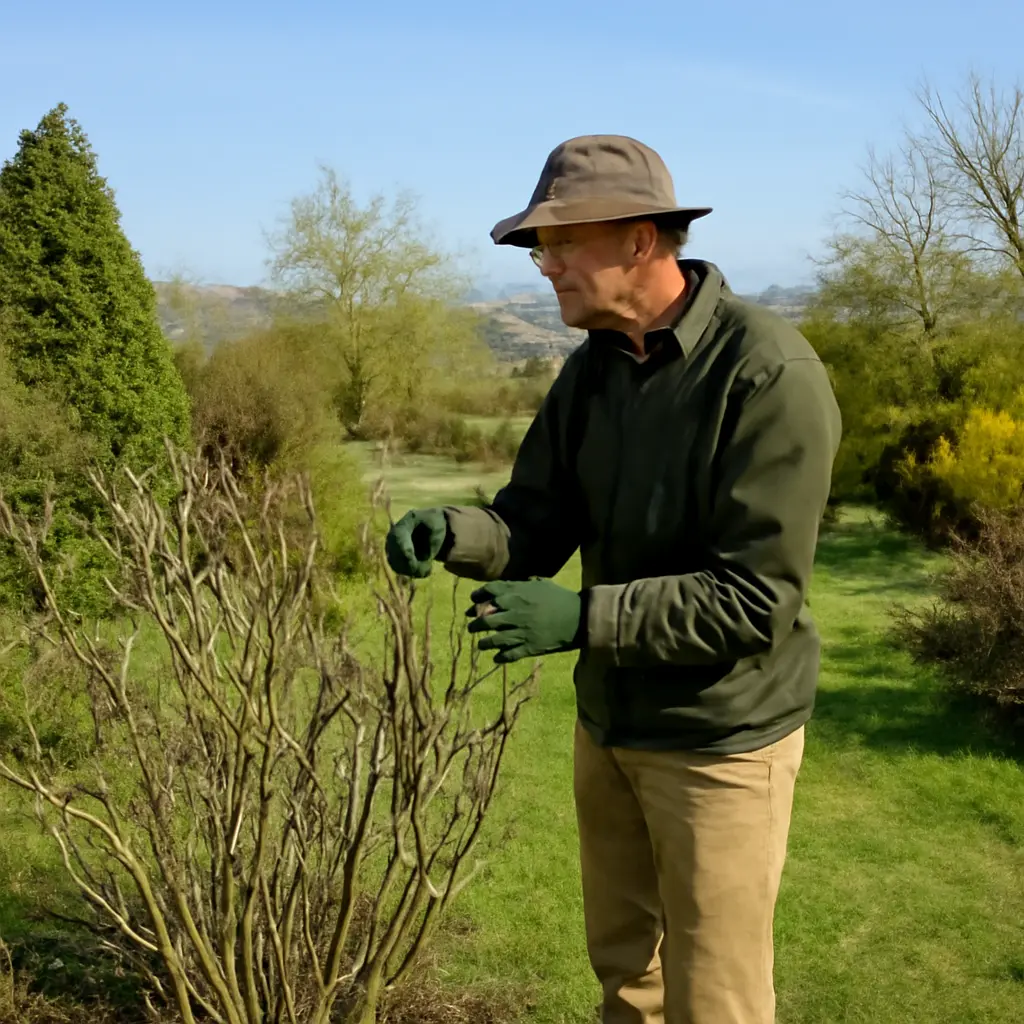
When a plant’s stem is injured, the result can be more than a wound: many plants activate dormant buds and grow replacement shoots, a response called resprouting. Whether a stem produces new growth depends on the plant’s species, the location and severity of the damage, stored resources, and conditions such as water and light. Resprouting helps explain why some shrubs and trees recover after browsing, cutting, fire, or storms, while others die or regrow only from their base. Understanding the process is useful in gardening, forestry, habitat management, and interpreting how plants respond to disturbance.
Resprouting and stem injury: what the response means
Resprouting is the production of new shoots from surviving buds or other growth points after part of a plant has been damaged or removed. Botanists distinguish it from seed-based regeneration: a resprout grows from tissue already belonging to the plant, whereas a seedling begins a new individual. The International Union of Forest Research Organizations’ Global Fire Glossary describes resprouting as vegetative regrowth from surviving plant parts after damage, including fire.
A stem injury can remove active growing tips, interrupt transport through vascular tissues, and change hormonal signals that regulate buds. If viable buds and enough resources remain, shoots may emerge near the wound, from lower parts of the stem, or from underground structures. The broad categories include epicormic resprouting from buds on stems or branches, basal resprouting from the plant’s base, and belowground resprouting from roots, rhizomes, or lignotubers.
Why plants replace damaged shoots
New shoots restore leaves and growing tips, helping a plant resume photosynthesis and build future stems. Injury can also release buds from suppression: while a dominant shoot is growing, it produces signals that help keep some side buds dormant. Removing or damaging that shoot may reduce this inhibition, allowing surviving buds to grow. This is one reason pruning can make some plants branch, though the response varies by species and by where the cut is made.
Regrowth is not guaranteed. A plant may fail to resprout if damage destroys its living buds, strips away too much of its stored energy, or severely disrupts water transport. Repeated injury can also exhaust reserves, even in a species that readily resprouts after a single event.
Stem injury triggers several routes to resprouting
The route of recovery depends on where viable buds survive. The same plant may use more than one route, and researchers commonly distinguish resprouting by the position of the new shoot rather than by a single universal mechanism. These categories connect the visible response—a new shoot—to the plant structures that make it possible.
Epicormic resprouting from the trunk or branches
Epicormic shoots emerge from dormant or previously suppressed buds beneath the bark of trunks and branches. They may appear after a tree loses its crown, is pruned, or experiences fire. In some species, buds remain viable under bark for long periods; in others, the capacity is limited. A burst of shoots therefore does not by itself prove that a tree has fully recovered: the shoots must remain connected to functional vascular tissue and receive adequate water and stored carbohydrates.
Basal resprouting from the stem base or root crown
Basal resprouting occurs when new shoots develop at or near the plant’s base, often from buds around the root crown. It is common in many shrubs and in trees that can recover after their aboveground stems are cut or killed. The original stem may be lost while the root system survives, so the returning growth can look like a new plant even though it is vegetative regrowth from the same individual.
Belowground resprouting from roots and specialized organs
Some plants regenerate shoots from roots, rhizomes, or lignotubers—woody swellings that store buds and resources, especially in certain fire-adapted plants. These structures can protect growth points from damage above the soil and support rapid shoot production afterward. Root sprouting can also make a plant spread beyond its original stem, which matters when gardeners manage suckering trees or when land managers assess vegetation recovery.
What determines whether an injured stem recovers?
Resprouting reflects the interaction of plant traits and injury conditions, not a simple rule that “cut plants grow back.” Researchers studying disturbance responses often consider bud availability, stored nonstructural carbohydrates, the condition of roots and vascular tissues, and the plant’s environment. A stem with living buds and an intact root system has better prospects than one whose injury reaches the root crown or repeatedly removes new growth.
Species traits and bud location
Species differ in how many dormant buds they retain, where those buds are located, and how well they tolerate the loss of stems. A plant with protected basal buds may recover from a broken trunk, while one relying on terminal buds may not replace a severed stem as readily. The ability to resprout is also distinct from the ability to survive every kind of disturbance: fire intensity, drought, and repeated browsing can exceed a plant’s tolerance.
Stored energy, water, and the severity of damage
Stored carbohydrates in roots, stems, and other tissues help fund new growth before replacement leaves can produce much energy. But resprouting uses those reserves, so repeated cutting or grazing can weaken a plant. Water availability also matters: new shoots need water, and a damaged stem may have reduced capacity to move it. The U.S. Forest Service’s guidance on tree wounds emphasizes that trees do not heal wounds in the way animals do; they compartmentalize damaged tissue and continue growing around it. Thus, visible shoot growth and wound closure are related but different processes.
Season and environmental conditions
The timing of injury can change the outcome because buds, stored resources, and growth activity vary through the year. Soil moisture, temperature, light, and competition influence whether new shoots establish. After a disturbance such as fire, a plant may resprout while seedlings also emerge; both pathways contribute to vegetation recovery, but they are not interchangeable. The U.S. National Park Service notes that fire effects depend on factors including fire behavior, vegetation, and site conditions, so a single fire does not produce the same response everywhere.
Resprouting in gardens, forests, and fire-prone landscapes
The biology has practical consequences. Gardeners use selective pruning to encourage branching, but cuts should be appropriate for the species and should avoid unnecessary injury. In forestry and restoration, resprouting can help native vegetation recover after disturbance, yet vigorous regrowth may also complicate control of invasive plants. After wildfire, identifying whether a plant is resprouting from the trunk, base, or roots helps assess its recovery strategy.
For example, many eucalyptus species can produce epicormic shoots after crown damage, while other fire-adapted plants may recover mainly from protected basal or belowground buds. This contrast illustrates why managers should identify the species and inspect the surviving tissues rather than assume that all burned trees will recover in the same way. A useful field record can note the injury height, surviving stem condition, shoot origin, and whether new growth persists over subsequent seasons.
A simple comparison chart would show the three principal routes: epicormic shoots arise on trunks or branches; basal shoots emerge at the root crown; and belowground shoots originate from roots or specialized organs. The chart should also distinguish resprouting from seedlings, which arise from seeds rather than surviving vegetative tissue.
Conclusion: resprouting reveals how plants respond to injury
When a stem is injured, surviving buds may grow into replacement shoots through epicormic, basal, or belowground resprouting. The outcome depends on species traits, injury severity, remaining buds and energy reserves, and environmental conditions. Resprouting is important in plant care and in understanding forest, fire, and habitat recovery, but new shoots do not automatically mean the whole plant has recovered. To learn more, consult local forestry or extension guidance, identify the plant before pruning, and observe where new shoots originate and whether they persist.
Sources: International Union of Forest Research Organizations, Global Fire Glossary, https://gfmc.online/literature/glossary.html; U.S. Forest Service, How to Prune Trees, https://www.fs.usda.gov/learn/trees/how-to-prune-trees; U.S. National Park Service, Fire Effects on Plants, https://www.nps.gov/articles/000/fire-effects-on-plants.htm; Clarke, P. J., et al., “Resprouting as a key functional trait: how buds, protection and resources drive persistence after fire,” New Phytologist, 2013, https://doi.org/10.1111/nph.12001.