
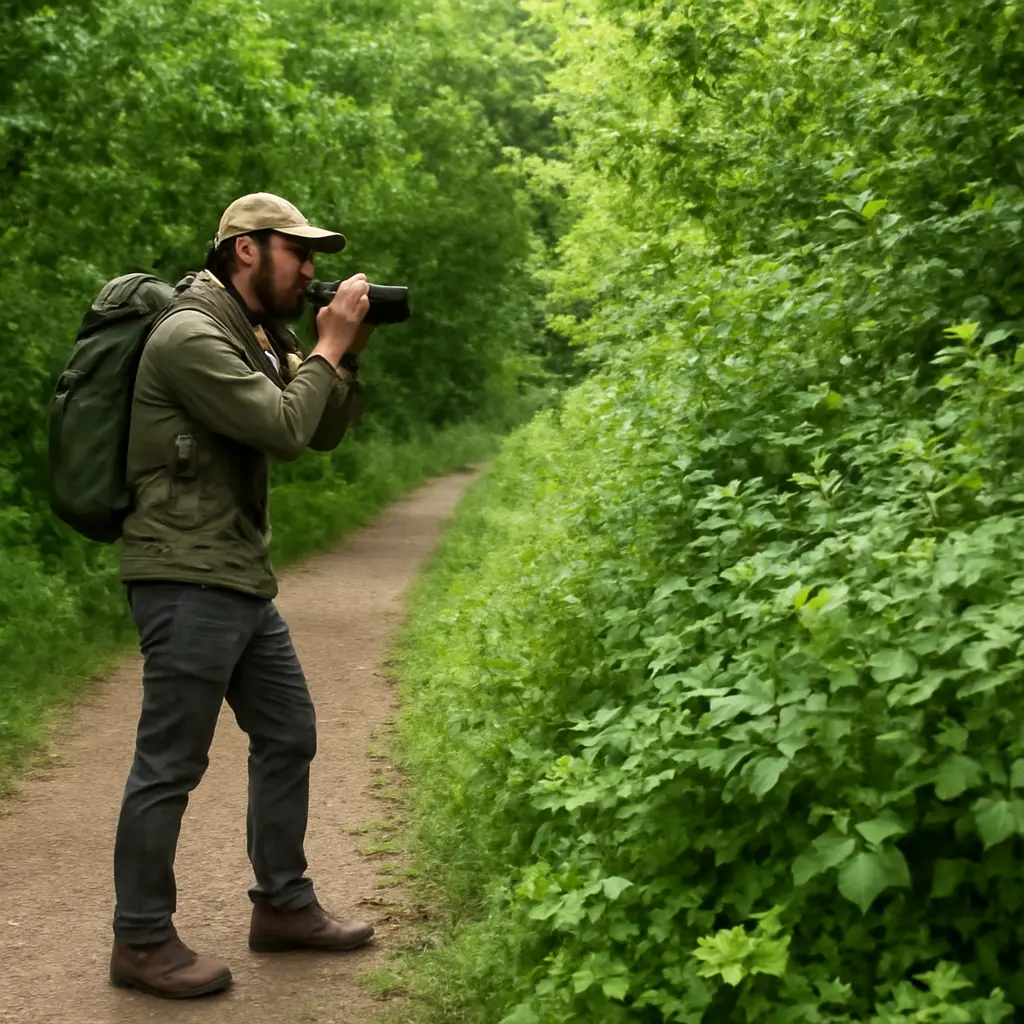
Invasive plants can turn a familiar hike into a narrower, less scenic, and sometimes less safe experience. They are nonnative species that spread in ways that cause ecological, economic, or social harm; along trails, dense growth can crowd out native plants, obscure views, snag clothing, and make routes harder to maintain. The National Park Service reports that invasive species affect more than 2.6 million acres of National Park System lands, while the U.S. Department of Agriculture estimates that invasive plants and animals cost the United States billions of dollars each year. The effects vary by species and site, but the pattern is clear: trail-edge invasions can change what hikers see, how they move, and what managers must do to keep public routes open.
Trail invasion explains how nonnative plants change the hiking experience
The National Park Service defines invasive species as nonnative organisms whose introduction causes or is likely to cause harm to the environment, economy, or human health. “Nonnative” alone does not mean “invasive”: a plant becomes a concern when it spreads and creates harmful effects. Along trails, the relevant examples include shrubs that form dense thickets, vines that climb over vegetation, and groundcovers that blanket the forest floor.
These species can alter a trail corridor—the strip of land directly alongside and above a path—by displacing native vegetation and changing its structure. A thicket may narrow a route or conceal a viewpoint; a climbing vine may cover shrubs and trees; and a low, fast-spreading groundcover may leave little room for native seedlings. The consequences depend on the plant, the local ecosystem, and the trail’s design and maintenance.
Trail-edge crowding narrows paths and blocks sightlines
Crowding occurs when invasive plants grow into the walking corridor or fill openings that once framed a view. Japanese barberry, for example, can form dense, thorny growth in some eastern forests. It may make passage less comfortable and complicate maintenance, though impacts differ across sites. When vegetation closes around a path, hikers may have less room to pass, see trail junctions, or look out from a clearing.
The experience is not only visual. Branches and thorns can catch clothing, and dense vegetation can make it harder for hikers and crews to spot obstacles near the trail. These are practical risks, not a claim that every invasive plant makes every trail dangerous. Local conditions, trail width, and management determine the actual effect.
Competition changes the plants hikers encounter
Invasive plants may compete with native species for light, water, nutrients, and space. The U.S. Forest Service describes how some invaders alter plant communities and ecosystem processes, with effects that can extend beyond the invaded patch. For hikers, this can mean fewer native wildflowers, less varied understory vegetation, or a more uniform-looking landscape. The degree of change is species- and habitat-specific; not every invasion produces the same ecological outcome.
That ecological change can also affect wildlife and the seasonal character of a route. If an invader replaces plants that provide food or shelter, animals that depend on those native species may lose resources. A trail’s “lost view,” then, can mean more than a blocked panorama: it may also be the loss of a diverse, locally characteristic landscape.
Trail maintenance costs rise when invasive plants spread
Trail maintenance includes keeping routes passable, preserving drainage, managing vegetation, and repairing erosion or other damage. Invasive growth can add repeated work: crews may need to cut back plants, remove seed-bearing material, clean tools, and return to check for regrowth. A one-time clearing may not control a plant that resprouts or spreads from seeds, roots, or fragments.
Spread follows disturbance and trail use
Disturbed soil and open edges can give some invasive plants opportunities to establish. Seeds may also move in mud stuck to boots, bicycle tires, or maintenance equipment, while plant fragments can be transported during clearing. The National Park Service and land-management agencies therefore encourage visitors to clean footwear and gear, stay on designated routes, and avoid carrying seeds or plant material between sites.
Trails are not the only source of invasion, and hikers are not the sole cause. Roads, landscaping, wildlife, waterways, and past land use can all contribute to spread. Still, good trail habits help reduce avoidable movement of seeds and fragments, especially between sensitive areas.
Early detection can make management more effective
Early detection means finding a new or small infestation before it becomes widespread. It matters because control can become more difficult and costly as an invasive population expands. The National Park Service uses monitoring, prevention, and targeted control as parts of invasive-species management; methods must be selected for the plant and site, since cutting, pulling, herbicides, or other treatments can have different risks and results.
Hikers can help by reporting unfamiliar plants or rapidly expanding patches to park staff or land managers, ideally with a location and photograph. Visitors should not pull or cut plants unless managers request it: misidentification, unsafe handling, or improper disposal can worsen the problem or damage native vegetation.
Trail examples show why invasive species effects differ by region
There is no single “trail invader.” The plants of concern vary with climate, habitat, and land history. Examples below illustrate different ways invasive species can change a hiking corridor; they are not a ranking of the worst species, and their local impacts should be checked with the relevant land manager.
Kudzu can overgrow vegetation in parts of the Southeast
Kudzu is a fast-growing vine introduced to the United States from Asia. The USDA National Invasive Species Information Center notes its capacity to blanket vegetation and structures in suitable conditions. Along affected routes, vines can cover shrubs and trees, making the corridor appear overgrown and obscuring the plants beneath them. Its severity varies with climate and site conditions, so it is not equally dominant across the country.
Himalayan blackberry can form dense thickets in western landscapes
Himalayan blackberry is an introduced shrub that can create tangled, thorny stands in parts of the Pacific Northwest and elsewhere. Such thickets may restrict access to trail margins and complicate work on paths and open areas. The plant also produces fruit, but a useful food source for some wildlife does not erase the ecological and management concerns documented in invaded habitats.
Garlic mustard can alter woodland understories in the East and Midwest
Garlic mustard is a Eurasian biennial herb established in many eastern and midwestern forests. It can form dense patches in woodland understories and compete with native plants. Because it is relatively low-growing, it may not physically block a trail like a thorny shrub, yet it can still replace the native ground-layer plants that give a forest floor its seasonal variety.
Prevention helps hikers protect trails and views
Prevention is often simpler than trying to control a widespread infestation. The following actions reduce opportunities for seeds and plant fragments to travel and help managers identify changes sooner:
- Clean mud, seeds, and plant fragments from boots, clothing, pets, and outdoor equipment before and after hikes.
- Stay on marked trails and use designated campsites to limit soil disturbance and avoid spreading plants into new areas.
- Do not collect, transport, or plant wild vegetation, and never dump garden waste in natural areas.
- Report suspected infestations to park staff or the responsible land agency rather than attempting unapproved removal.
- Follow local guidance on cleaning stations, seasonal closures, and invasive-plant treatment areas.
A useful illustration for trail groups would be a simple before-and-after corridor diagram: one panel showing a diverse, open trail edge and another showing a dense invasive thicket, with labels for sightline, path width, and native understory. Such a comparison can clarify why managers monitor not just the trail tread but also the vegetation beside it.
Conclusion: healthier trail edges preserve access and scenery
Invasive plants can steal from hikers by narrowing paths, obscuring views, displacing native vegetation, and adding recurring work for trail crews. Their effects vary by species and location, but national agencies document a substantial land-management challenge: the National Park Service reports invasive species across more than 2.6 million acres of park lands, and federal sources describe billions of dollars in annual U.S. costs associated with invasive species broadly.
The most useful response is informed prevention: clean gear, remain on designated routes, report suspected patches, and follow local instructions. Those small actions support early detection and help land managers protect both ecological diversity and the open, welcoming trail experience hikers value.
Sources: National Park Service, Invasive Species, https://www.nps.gov/subjects/invasive/; U.S. Department of Agriculture, National Invasive Species Information Center, https://www.invasivespeciesinfo.gov/; U.S. Forest Service, Invasive Species, https://www.fs.usda.gov/managing-land/invasive-species; U.S. Department of Agriculture, National Invasive Species Information Center, Kudzu, https://www.invasivespeciesinfo.gov/terrestrial/plants/kudzu; Washington State Noxious Weed Control Board, Himalayan Blackberry, https://www.nwcb.wa.gov/weeds/himalayan-blackberry; U.S. Department of Agriculture, National Invasive Species Information Center, Garlic Mustard, https://www.invasivespeciesinfo.gov/terrestrial/plants/garlic-mustard.