
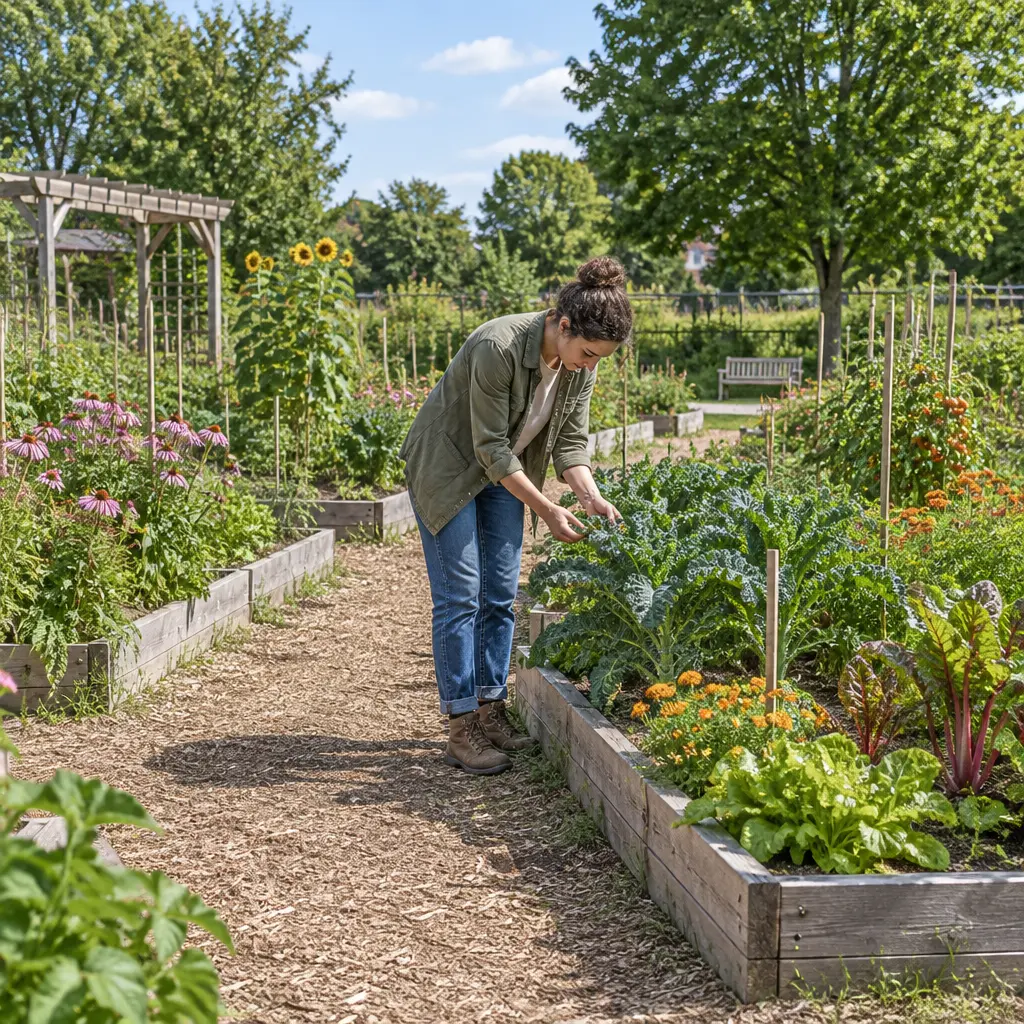
Invasive plants are non-native species that establish and spread in ways that cause ecological, economic, or human-health harm; a plant being foreign, vigorous, or hard to remove does not automatically make it invasive. What gardeners often get wrong is treating invasiveness as a fixed label or a problem confined to wild places. Risk depends on a plant’s behavior, location, and pathways of spread, so responsible gardening means checking local lists, avoiding escape-prone species, and managing seeds and plant waste. The stakes are substantial: the U.S. Department of Agriculture reports that invasive plants affect millions of acres in the United States, while the U.S. Geological Survey emphasizes that impacts can include altered habitat, water use, and fire patterns. Understanding the definitions, garden escape routes, ecological effects, and practical alternatives helps gardeners reduce harm without mistaking every non-native plant for a threat.
Invasive Plants Are Defined by Impact, Not Simply by Origin
The U.S. Department of Agriculture’s National Invasive Species Information Center summarizes the federal definition: an invasive species is non-native to an ecosystem and causes, or is likely to cause, economic or environmental harm or harm to human health. The definition has two essential parts—introduced origin and harmful impact. A plant can be non-native without being invasive, and a plant that grows quickly in a garden is not necessarily an ecological invader.
The distinction matters because labels guide action. The National Park Service notes that invasive plants can displace native species and alter ecosystem processes, but whether a species poses a risk can vary by region and habitat. A plant listed as invasive in one state may be less problematic elsewhere, while a species not yet widespread may still be a significant prevention priority. Gardeners should consult current state or regional authorities rather than relying on a generic “invasive plants” list.
“Non-native” and “invasive” are not synonyms
A non-native plant is one introduced beyond its natural historical range, often through cultivation, trade, or transport. “Invasive” adds a consequence: the plant establishes and spreads, with actual or likely harm. Many familiar garden plants are introduced but remain contained in cultivation or do not cause documented harm. Conversely, a harmful plant may look attractive and behave well in a garden for years before escaping into nearby natural areas.
Weeds, aggressive plants, and noxious weeds are different categories
“Weed” is a practical gardening term for a plant growing where it is unwanted; it is not a scientific or legal classification. “Aggressive” generally describes rapid growth or persistence, but does not by itself prove ecological harm. “Noxious weed” is a legal designation used by federal, state, or local authorities, and its scope and controls vary by jurisdiction. These categories overlap, but they are not interchangeable: gardeners should check the relevant regulation and regional invasive-species guidance before planting or moving a suspect species.
Garden Practices Can Turn Ornamental Plants into Escapees
The pathway from garden to wildland is often ordinary: seeds travel on wind, water, animals, vehicles, or contaminated soil; fragments spread when plants are dumped; and ornamental species move through nursery sales and exchanges. The National Invasive Species Council identifies pathways of introduction and spread as central to prevention. That means a garden’s location and maintenance practices can matter as much as a plant’s appearance or vigor.
Seeds and plant fragments travel beyond property lines
Plants disperse in different ways. Wind-blown seed can cross fences, berries can be carried by birds, and aquatic or wetland plants may move downstream. Some species spread through rhizomes, stolons, or stem fragments, so cutting or pulling them without containing the material can create new starts. The U.S. Geological Survey’s invasive-species resources describe transport and dispersal as important drivers of establishment; gardeners can reduce risk by removing seed heads before they mature and keeping viable fragments out of waterways and natural areas.
Dumping garden waste is a common, avoidable pathway
A pile of discarded trimmings may seem harmless, but seeds and live roots can persist and establish outside cultivation. Do not dump garden waste in parks, forests, vacant land, or waterways. Follow municipal instructions for composting or disposal, and use contained disposal methods for listed invasive plants. Clean soil and plant material from tools, footwear, vehicles, and equipment after working in infested areas, especially before moving to a clean site.
Plant labels and online recommendations are not regional risk assessments
A plant marketed as “easy-care,” “fast-growing,” or “wildlife-friendly” is not necessarily safe for every region. Climate, soil, rainfall, nearby habitat, and local rules all affect the likelihood of escape and harm. Before buying, check state invasive-plant lists, extension-service guidance, and local conservation recommendations. If a species is restricted or listed as invasive nearby, choose a non-invasive substitute suited to the same growing conditions.
Invasive Plants Can Change Habitats and Ecosystem Processes
The consequences of an invasive plant go beyond an untidy garden or competition among flowers. Some species form dense stands that reduce space and resources for native plants; others alter soil chemistry, water availability, or disturbance patterns. The National Park Service and U.S. Geological Survey describe such effects as ecosystem-level impacts, though the specific consequences differ among species and landscapes. A useful way to assess risk is to consider what a plant does after it establishes, not only how quickly it grows.
Competition can reduce native plant diversity
Dense invasive growth can shade out native seedlings, occupy limited rooting space, or monopolize water and nutrients. The result may be a simplified plant community with fewer native species and fewer of the resources local wildlife depends on. The U.S. Forest Service’s invasive-plant guidance stresses that impacts vary by species and site, so monitoring is important: a small, newly established patch may be easier to control than a widespread infestation.
Some plants alter fire, water, or soil conditions
Certain invasive plants can change the frequency or intensity of fire by adding highly flammable biomass, while others use substantial water or affect erosion and soil processes. These are not universal traits of invasive plants; they are species-specific effects that have been documented in particular settings. For example, fire agencies and land managers have raised concerns about invasive grasses that create continuous fuel in some western landscapes. Local land-management sources can clarify whether such risks apply where you garden.
Early detection is more practical than waiting for a large infestation
Small infestations are generally easier to identify, contain, and remove than established populations. The National Invasive Species Council’s prevention approach emphasizes early detection and rapid response because delaying action can allow plants to spread and increase control costs. Gardeners can help by photographing unfamiliar plants, recording where they appear, and reporting suspected listed species through local extension services, land managers, or state invasive-species programs.
Responsible Gardening Starts with Prevention and Careful Removal
The best response is not to remove every non-native plant indiscriminately. It is to prevent known harmful species from spreading, choose lower-risk plants, and manage established invasives according to sound local guidance. The National Park Service and state extension programs recommend matching the treatment to the plant’s biology and the site; poorly timed cutting, tilling, or herbicide use can fail or cause additional damage.
Choose regionally appropriate alternatives
Native plants are generally adapted to local climate and ecological relationships, but “native” should still be matched to the site and purpose. A regional native-plant society, botanical garden, or Cooperative Extension office can suggest species for the same light, soil, moisture, and design needs as a risky ornamental. Also ask nurseries about sterile cultivars and verify claims: a cultivar described as sterile or low-seeding should be supported by reliable, region-specific information.
Remove invasive plants with a plan
Identify the species before treatment, then determine how it reproduces and what disposal rules apply. Pulling may work for young plants with shallow roots, but fragments left behind can regenerate in species that spread vegetatively. Repeated cutting may weaken some plants but can stimulate regrowth in others. For large infestations or plants near waterways, consult local extension staff or land managers about timing, permits, and safe control methods. Use pesticides only as directed on the label and in accordance with local regulations.
Track the result and restore the site
Control is often a process rather than a one-time task. Revisit treated areas to check for seedlings and regrowth, dispose of material correctly, and replant bare ground with suitable vegetation where appropriate. Follow-up reduces the chance that disturbance will simply create space for another invasive species. A simple garden record—species, location, treatment date, and follow-up observations—can make management more effective.
Conclusion: Garden Choices Can Help Prevent Invasive Spread
Invasive plants are defined by both non-native origin and harmful impact, not by foreignness or garden vigor alone. They can escape through seeds, plant fragments, and discarded waste, then affect native plant communities and ecosystem processes. Gardeners can make a meaningful difference by checking regional lists, avoiding known problem species, containing plant waste, reporting early outbreaks, and using locally informed removal and replanting practices. Before your next planting or cleanup, consult a state extension office or invasive-species program and choose plants that suit your garden without creating risks for the surrounding landscape.
Sources: U.S. Department of Agriculture, National Invasive Species Information Center, “What Is an Invasive Species?”, https://www.invasivespeciesinfo.gov/what-are-invasive-species; U.S. Department of Agriculture, National Invasive Species Information Center, “Invasive Plants,” https://www.invasivespeciesinfo.gov/subject/invasive-plants; National Invasive Species Council, Management Plan, https://www.doi.gov/invasivespecies/national-invasive-species-council; National Park Service, “Invasive Plants,” https://www.nps.gov/subjects/invasive/plants.htm; U.S. Geological Survey, “Invasive Species,” https://www.usgs.gov/programs/biological-threats-and-invasive-species-research-program/science/invasive-species; U.S. Forest Service, “Invasive Species,” https://www.fs.usda.gov/managing-land/invasive-species