
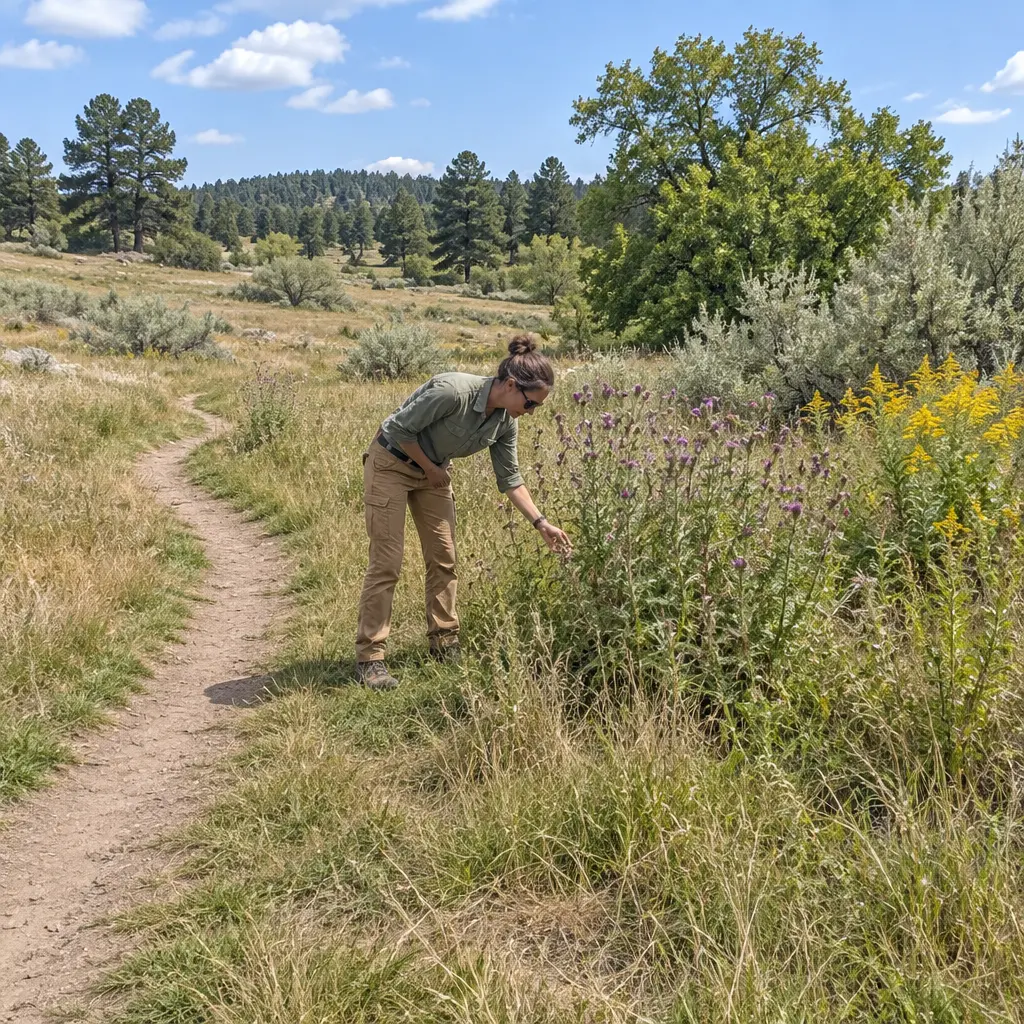
Invasive plants are non-native plants that establish and spread in places where they cause, or are likely to cause, environmental, economic, or human-health harm. Their effects extend well beyond the plants themselves: they can displace native species, alter fire and water cycles, damage agriculture and infrastructure, and impose long-term control costs. The scale is substantial: a 2021 study in Nature estimated that established invasive species across all groups cost the world at least US$1.288 trillion from 1970 to 2017, while the U.S. Department of Agriculture reports that invasive plants affect millions of acres in the United States. Understanding those impacts means examining ecological change, economic and social burdens, how invasions spread, and which management actions work.
Invasive plants affect ecosystem structure and function
The U.S. National Park Service describes invasive plants as non-native plants that cause harm to the environment, economy, or human health. “Invasive” is therefore not simply a synonym for “introduced”: many introduced plants do not spread or cause significant harm. Ecologists commonly describe the process as introduction, establishment, and spread, with impacts emerging as populations expand and interact with local ecosystems.
Invasive plants vary widely in growth form and impact. They include trees such as tree-of-heaven, vines such as kudzu, grasses such as cogongrass, and floating or submerged aquatic plants such as water hyacinth. Their shared significance is their capacity to establish beyond their native range and disrupt the places they enter.
Biodiversity loss and habitat change
Biodiversity impacts occur when invasive plants compete with native plants for light, water, nutrients, or space, or change habitat so that native species can no longer thrive. Dense stands may simplify vegetation, reduce native plant diversity, and alter food and shelter available to insects, birds, and other wildlife. Effects vary by species and site; invasion does not produce the same outcome in every ecosystem.
For example, the National Park Service identifies invasive plants as a major concern in protected lands because they can displace native vegetation and alter the conditions that support wildlife. In the western United States, cheatgrass is associated with changes to sagebrush ecosystems and the loss of habitat important to species such as greater sage-grouse. The example illustrates how a plant’s ecological effects can cascade beyond competition among plants.
Changes to fire, water, and nutrient cycles
Some invasive plants change ecosystem processes—the recurring natural cycles that determine how fire moves, water flows, and nutrients circulate. Cheatgrass dries early and can create continuous fine fuels, helping fires spread through landscapes where fire was historically less frequent. Repeated burning can then favor cheatgrass over slower-growing native plants, reinforcing the invasion.
In aquatic environments, invasive plants can form thick mats that obstruct waterways, shade submerged vegetation, and interfere with recreation and water use. The U.S. Geological Survey documents how invasive aquatic species can affect water systems and infrastructure. Such examples show why impacts should be evaluated not only by the area occupied but also by changes to ecosystem function.
Invasive plants impose economic and social costs
The economic impact of invasive plants includes the direct costs of prevention, monitoring, and control, as well as losses in agriculture, forestry, fisheries, property use, and recreation. The broadest global estimate comes from a 2021 analysis by researchers led by Christophe Diagne, published in Nature: invasive species across all taxonomic groups—not plants alone—cost at least US$1.288 trillion between 1970 and 2017. The researchers characterized this as a conservative estimate because many costs are unreported or difficult to measure.
Agriculture, forestry, and infrastructure
In agriculture and forestry, invasive plants can compete with crops and tree seedlings, contaminate harvested products, and increase the need for herbicides, machinery, or manual removal. They may also obstruct roads, drainage channels, and utility corridors. The burden falls on land managers, farmers, governments, and communities, and it can persist because seeds or plant fragments remain capable of regenerating after initial treatment.
The U.S. Department of Agriculture’s National Invasive Species Information Center highlights invasive plants as a continuing challenge for agriculture, natural resources, and land management. Costs are context-dependent: a small, newly detected population may be relatively inexpensive to remove, whereas a widespread infestation can require repeated treatment and long-term monitoring.
Community health, access, and cultural values
Social impacts include reduced access to parks, waterways, and traditional harvesting places; changes to culturally important landscapes; and health risks associated with some invasive plants. For example, giant hogweed can cause severe skin reactions when sap on the skin is exposed to sunlight, according to public-health guidance from the U.S. Centers for Disease Control and Prevention. Plant identification and safe handling therefore matter alongside ecological control.
Impacts are not distributed evenly. Rural landowners, Indigenous communities, outdoor workers, and local agencies may face different exposure, access, and management challenges. Considering these differences helps ensure that control priorities reflect both ecological damage and the needs of people who depend on affected places.
Invasive plant spread is shaped by pathways and environmental change
A pathway is the route or activity by which a non-native plant, seed, or propagule reaches a new area. The Convention on Biological Diversity identifies pathways such as trade, transport, travel, and the movement of contaminated goods. Once introduced, a plant’s ability to establish and spread depends on traits such as seed production and dispersal, as well as local climate, disturbance, and ecosystem conditions.
Trade, transport, and accidental introduction
Plants may arrive intentionally for ornamental planting, erosion control, or agriculture, then spread beyond cultivation. Others move accidentally in soil, nursery stock, seeds, vehicles, or equipment. Roads and waterways can serve as corridors: roadside maintenance and construction may disturb soil, while boats and trailers can move plant fragments between water bodies.
The pathway perspective shifts prevention upstream. Screening plants before sale, cleaning boats and equipment, and using weed-free materials can reduce the chance that a new infestation begins. These measures are often more effective than attempting to remove a species after it has become widespread.
Disturbance and climate change
Disturbance—such as fire, flooding, soil excavation, or intensive grazing—can create open conditions in which some invasive plants establish readily. Climate change can further alter where plants can survive by shifting temperature and precipitation patterns, although responses differ among species and regions. The Intergovernmental Science-Policy Platform on Biodiversity and Ecosystem Services identifies climate change, land-use change, and biological invasions as interacting pressures on nature.
These factors can reinforce one another. For example, an invasive grass may increase fire frequency; fire may favor that grass; and warmer, drier conditions may increase the area exposed to fire. This is why managers need to assess not only a plant’s presence but also the environmental conditions that help it spread.
Invasive plant management combines prevention, control, and restoration
Management aims to prevent introductions, detect new populations early, contain established infestations, and reduce harm where eradication is no longer feasible. The appropriate response depends on the plant, the site, the scale of invasion, and the consequences of treatment. The U.S. National Park Service and USDA emphasize that monitoring and follow-up are essential because a single treatment rarely prevents regrowth or reinvasion.
Prevention and early detection
Prevention reduces the chance of introduction through measures such as screening horticultural species, cleaning equipment, using locally appropriate native plants, and avoiding the movement of contaminated soil or plant material. Early detection means finding an infestation while it is small enough for rapid response. Reporting unfamiliar plants to local extension services, land managers, or invasive-species programs can help experts verify identification and choose an appropriate response.
Mechanical, chemical, and biological control
Mechanical control includes pulling, cutting, mowing, or digging plants; chemical control uses herbicides; and biological control uses carefully evaluated natural enemies to suppress a target species. Each approach has limitations. Cutting can stimulate regrowth in some plants, herbicides can affect non-target organisms if misused, and biological control requires rigorous assessment to reduce risks to native species.
Integrated management combines methods according to site conditions and uses follow-up monitoring to measure results. For example, a land manager may remove plants, treat regrowth, and then replant native vegetation to reduce bare ground that could otherwise be reinvaded. Treatment decisions should follow local regulations and expert guidance, particularly where herbicides or potentially hazardous plants are involved.
Restoration and measuring outcomes
Restoration repairs ecological functions after control by supporting native plants, stabilizing soil, and improving habitat. Success is therefore not simply the number of invasive plants removed. Useful measures include the area treated, reinvasion rates, native plant recovery, changes in habitat condition, and the cost and effort required over time.
Figure suggestion: a simple pathway diagram could show introduction, establishment, spread, impact, and management feedback. A second chart could compare prevention and early-response costs with the recurring costs of managing a widespread infestation, using local program data where available.
Conclusion: understanding invasive plant impacts supports better decisions
Invasive plants can reduce biodiversity, change fire and water cycles, damage livelihoods and infrastructure, and affect human health and access to valued places. Their impacts depend on how they arrive, the conditions that help them establish, and the capacity of communities and land managers to respond. Global cost estimates show that biological invasions are a major economic concern, while examples such as cheatgrass and giant hogweed demonstrate that impacts range from ecosystem change to direct health risks.
Prevention, early detection, carefully selected control, and ecological restoration offer the strongest framework for limiting harm. Readers can help by choosing suitable non-invasive plants, cleaning outdoor equipment, learning to identify priority species, and reporting suspected new infestations to local authorities or extension services. For further reading, consult the USDA National Invasive Species Information Center, the National Park Service, the U.S. Geological Survey, and regional invasive-species programs.
Sources: U.S. National Park Service, Invasive Plants, https://www.nps.gov/subjects/invasive/invasive-plants.htm; Diagne et al., 2021, “High and rising economic costs of biological invasions worldwide,” Nature, https://www.nature.com/articles/s41586-021-03405-6; U.S. Department of Agriculture, National Invasive Species Information Center, https://www.invasivespeciesinfo.gov/; U.S. Geological Survey, Nonindigenous Aquatic Species, https://nas.er.usgs.gov/; U.S. Centers for Disease Control and Prevention, Giant Hogweed, https://www.cdc.gov/niosh/topics/plants/giant-hogweed.html; Convention on Biological Diversity, Invasive Alien Species, https://www.cbd.int/invasive/; Intergovernmental Science-Policy Platform on Biodiversity and Ecosystem Services, 2023, Invasive Alien Species Assessment, https://www.ipbes.net/ias