
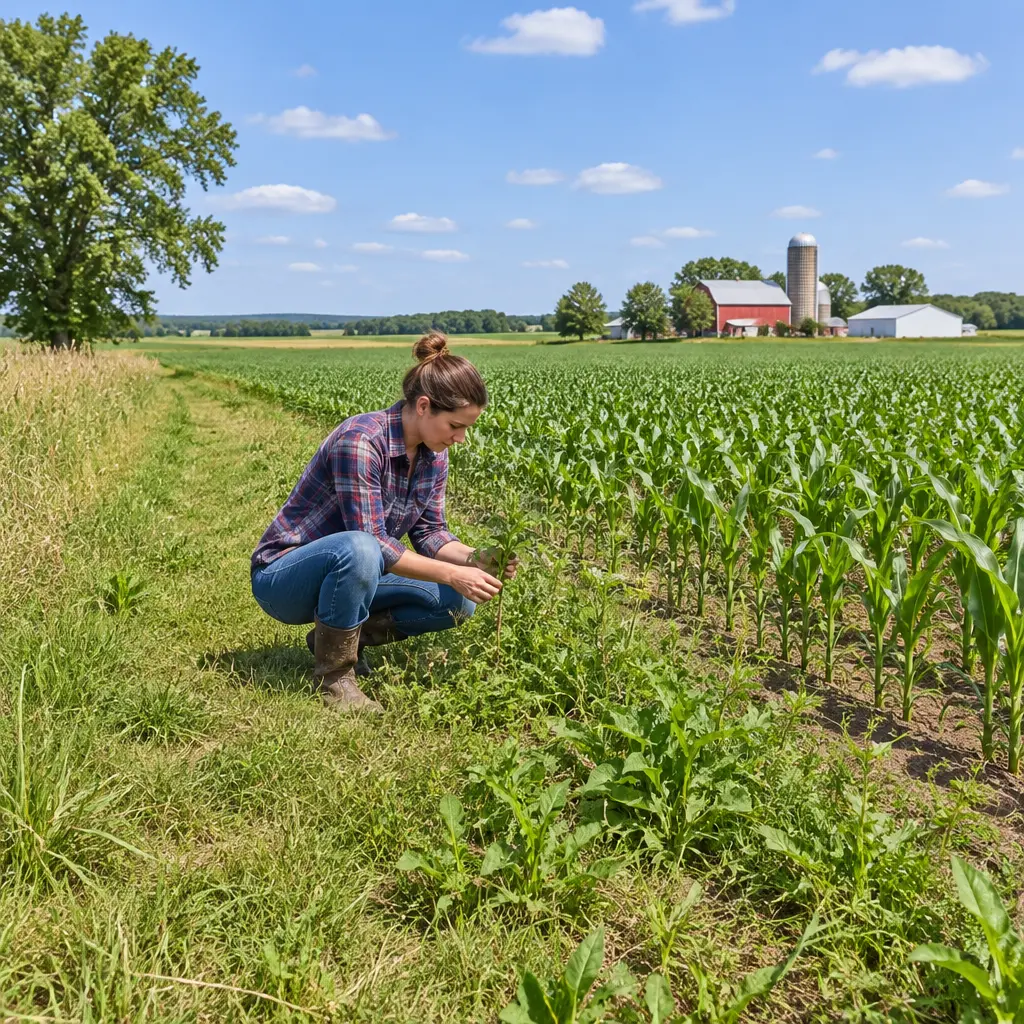
Invasive plants are non-native plants that establish and spread beyond cultivation, causing ecological or economic harm. On farms, species such as Palmer amaranth, waterhemp, and Canada thistle can raise costs by reducing yields, increasing labor and herbicide use, complicating harvest, and contaminating crops. The U.S. Department of Agriculture’s National Invasive Species Information Center reports that invasive weeds can reduce crop yields and increase production costs; the exact burden varies by crop, region, and infestation. Understanding how these plants affect yields, control budgets, equipment, and long-term land management helps farmers prioritize prevention and respond before infestations become expensive.
Invasive plants increase farm production costs through competition and control
An invasive plant is generally a non-native species whose introduction causes or is likely to cause economic or environmental harm. The USDA National Invasive Species Information Center uses this harm-based definition, distinguishing invasive plants from non-native plants that do not cause significant damage. On farms, the relevant group includes invasive agricultural weeds—unwanted plants that compete with crops, interfere with field operations, or spread into pastures and waterways.
The expense is broader than the price of herbicide. A farm may lose crop revenue, spend more on scouting and control, make additional field passes, pay for hand-weeding, clean equipment between fields, or face lower crop quality. A 2021 review in the journal Nature Plants estimated that invasive species worldwide cost at least $1.3 trillion from 1970 to 2017; that figure covers many sectors and types of invasive species, not farm weeds alone. It illustrates the scale of invasive-species damage but should not be treated as a farm-specific cost estimate.
Crop competition reduces yield and revenue
Crop competition occurs when weeds use resources—such as light, water, nutrients, and growing space—that crops need. The cost depends on weed density, emergence timing, crop type, weather, and how long weeds remain uncontrolled. Early-emerging weeds are often especially damaging because they compete during crop establishment, when yield potential is being set.
Research synthesized by the Weed Science Society of America has estimated that weeds cause substantial annual crop losses in the United States, though estimates vary by crop and methodology. A widely cited WSSA analysis estimated potential annual losses of approximately $43 billion across major U.S. crops if weeds were not controlled. This is an estimate of potential losses, not the amount farmers actually lose each year after control measures.
Control costs include labor, chemicals, and repeated fieldwork
Weed control costs include herbicide, application, fuel, equipment wear, scouting, and labor. A persistent or herbicide-resistant infestation may require different products, mixtures, additional passes, or mechanical and hand control. These measures can increase costs while still leaving some weeds uncontrolled.
The USDA Economic Research Service notes that herbicide-resistant weeds have led farmers to change weed-management practices, including using additional herbicides and nonchemical tactics. Resistance is not the same as invasiveness: a weed may be invasive without being herbicide-resistant, and resistance can develop in native or non-native weeds. When both traits occur together, however, managing the plant can become particularly costly.
Invasive weed species create different kinds of farm expenses
The costs of invasive plants depend on their growth habits and where they occur. Annual weeds often create urgent, season-by-season control expenses; perennial weeds can persist through roots or rhizomes; and aquatic or wetland plants can obstruct drainage and water use. Recognizing these differences helps farmers match control methods to the plant rather than relying on a single treatment.
Annual weeds can drive intensive in-season control
Annual invasive weeds complete their life cycle in one growing season and reproduce by seed. Palmer amaranth and waterhemp are examples of annual pigweeds that can emerge over an extended period, making a single control operation inadequate in some fields. If plants escape control and set seed, the resulting seedbank can create repeated management costs in future seasons.
Palmer amaranth is particularly costly where it is established because it grows rapidly, produces abundant seed, and can be resistant to multiple herbicide modes of action. The University of Georgia Cooperative Extension has documented the need for integrated management in affected crops, combining timely residual herbicides, crop rotation, cultivation where suitable, and removal of surviving plants before seed production. The best program varies by location, crop label, and resistance profile.
Perennial weeds can require repeated treatment over several years
Perennial weeds survive for more than two years and may regrow from roots, rhizomes, or other underground structures. Canada thistle, for example, can spread through underground roots as well as seed. Cutting or spraying only the visible shoots may not eliminate established plants, so control often requires repeated, well-timed actions and monitoring.
The University of Minnesota Extension describes Canada thistle as a persistent weed whose extensive root system makes eradication difficult. On farms, that persistence can mean repeated herbicide or mowing expenses, reduced pasture productivity, and time spent preventing spread into adjacent fields. Because the plant’s underground reserves and regrowth matter, treatment timing and follow-up are central to controlling costs.
Invasive plants can interfere with harvest and product quality
Some weeds remain a problem even when they cause limited direct yield loss. Tall, tangled, or green weeds can slow harvest, increase moisture or foreign material in harvested crops, and require extra cleaning or drying. Seeds from weeds may also contaminate grain or seed lots, potentially reducing grade or marketability.
The financial effect is crop- and market-specific: a modest level of contamination may be tolerated in one commodity but trigger discounts or rejection in another. Farmers can reduce this risk by scouting field edges and harvest routes, controlling weeds before seed production, and cleaning combines or other equipment before moving from infested fields to clean ones.
Farm costs extend beyond the field to soil, water, and operations
Invasive plants can affect more than crop rows. They may occupy field margins, irrigation channels, drainage systems, roadsides, and pasture, creating costs that are easy to overlook in a per-acre crop budget. Their effects can include blocked water movement, degraded grazing, reduced access, and the spread of seeds or plant fragments between fields.
Waterway and drainage infestations add maintenance costs
Aquatic and wetland invasive plants can obstruct irrigation intakes, drainage ditches, and farm ponds. Dense growth may slow water flow or make access difficult, prompting removal, equipment rental, or repeated maintenance. Plant material moved by water, machinery, or contaminated soil can also establish new infestations downstream or elsewhere on the farm.
The U.S. Geological Survey identifies water movement and human activities as important pathways for aquatic invasive species. For farms, prevention can include inspecting irrigation and drainage equipment, avoiding the movement of contaminated vegetation, and following local rules for disposing of removed plants. Control methods must be selected carefully because treatments near water may be subject to environmental and pesticide regulations.
Pasture infestations reduce usable forage
Invasive weeds in pasture can displace forage plants, reduce grazing quality, and, in some cases, pose risks to livestock. The resulting expenses may include weed control, reseeding, supplemental feed, and lost grazing capacity. The scale of the impact depends on the species, infestation level, pasture condition, and livestock management.
The USDA’s Natural Resources Conservation Service recommends assessing the whole pasture system rather than treating weeds in isolation. Maintaining competitive forage through appropriate grazing, soil fertility, and reseeding can help limit opportunities for weeds to establish. Species identification is important because some plants require specific control methods and may be toxic to livestock.
Equipment and transport can spread infestations
Seeds and plant fragments can travel on combines, tillage tools, trucks, hay, soil, and irrigation water. An infestation that begins in one field can therefore create costs across multiple fields if machinery is moved without inspection or cleaning. Cleaning equipment takes time, but it can be less expensive than repeatedly controlling new patches.
A practical farm biosecurity routine is to work in cleaner fields before heavily infested ones, remove plant material from equipment, inspect field entrances and margins, and manage patches before seeds mature. These steps are particularly useful when custom operators, contractors, or shared equipment serve multiple farms.
Integrated management helps limit long-term costs
Integrated weed management combines prevention, monitoring, and multiple control tactics rather than depending on one herbicide or one field operation. The goal is not simply to kill visible weeds this season; it is also to reduce seed production, slow spread, preserve effective control options, and avoid unnecessary spending.
Early detection lowers the cost of containing new patches
Early detection means identifying and treating new or isolated infestations before they become widespread. Regular scouting of field margins, waterways, disturbed ground, and equipment routes can reveal plants that routine crop-row inspections miss. Records of species, location, density, and treatment response help farmers assess whether a patch is expanding.
The USDA and state extension services advise accurate identification before selecting a control strategy. This matters because similar-looking species can respond differently to herbicides, mowing, or cultivation. When a suspected invasive plant is new to a region or subject to quarantine rules, farmers should contact their state department of agriculture or local extension office for guidance.
Diversified tactics reduce dependence on a single control method
A diversified program may combine crop rotation, competitive crop varieties, cover crops, cultivation, mowing, hand removal, and herbicides used according to their labels. Rotating crops can change planting dates and control opportunities; cover crops can compete with weeds for light and space; and targeted removal can prevent small patches from producing seed.
For herbicide-resistant weeds, rotating modes of action alone is generally not enough if the same weed survives and reproduces. The Weed Science Society of America emphasizes integrated practices that reduce selection pressure and prevent seed return. Farmers should use current local extension recommendations and follow pesticide labels, which are legally enforceable directions.
Budgeting should account for prevention and future liabilities
A useful weed-management budget separates immediate control costs from longer-term risks. Relevant entries include scouting time, herbicide and application costs, machinery passes, cleaning, labor, yield effects, harvest delays, and follow-up treatment. Comparing these costs across fields can help direct resources toward high-risk patches where early action is likely to prevent wider spread.
Farmers can also document treatment performance and seed production annually. If a control measure is failing, repeated use without adjustment may waste money and accelerate resistance. A local agronomist or extension specialist can help interpret field records, identify species, and estimate whether prevention, spot treatment, or broader intervention is the most economical response.
Conclusion: prevention protects farm margins
Invasive plants raise the cost of running a farm through crop competition, yield and quality losses, repeated control, harvest disruption, waterway maintenance, pasture degradation, and spread on equipment. Annual weeds may demand intensive in-season action, while perennials can require multiple years of follow-up. The total economic burden depends on the plant, crop, infestation, and local conditions; broad global invasive-species estimates should not be mistaken for farm-specific costs.
Farmers can limit these expenses by identifying weeds early, preventing seed and plant-fragment movement, diversifying control tactics, and keeping records of costs and results. For practical next steps, scout high-risk areas, confirm plant identification with a local extension service, and build an integrated plan that follows current regional guidance and pesticide labels.
Sources: USDA National Invasive Species Information Center, Invasive Species Definition Clarification and Guidance White Paper, https://www.invasivespeciesinfo.gov/what-are-invasive-species; Diagne et al., “High and rising economic costs of biological invasions worldwide,” Nature Plants, 2021, https://www.nature.com/articles/s41477-021-01006-9; Weed Science Society of America, “WSSA Estimates of the Economic Costs of Weed Management,” https://wssa.net/wssa/weed/; USDA Economic Research Service, Genetically Engineered Crops in the United States, https://www.ers.usda.gov/data-products/adoption-of-genetically-engineered-crops-in-the-u-s/; University of Georgia Cooperative Extension, Palmer Amaranth: A New Weed Threat to Georgia Agriculture, https://extension.uga.edu/publications/detail.html?number=C867; University of Minnesota Extension, Canada Thistle, https://extension.umn.edu/weed-management/canada-thistle; U.S. Geological Survey, Aquatic Invasive Species, https://www.usgs.gov/mission-areas/ecosystems/science/aquatic-invasive-species; USDA Natural Resources Conservation Service, Pasture and Hay Planting, https://www.nrcs.usda.gov/resources/guides-and-instructions/pasture-and-hay-planting; Weed Science Society of America, Herbicide Resistance, https://wssa.net/wssa/weed/herbicide-resistance/.