
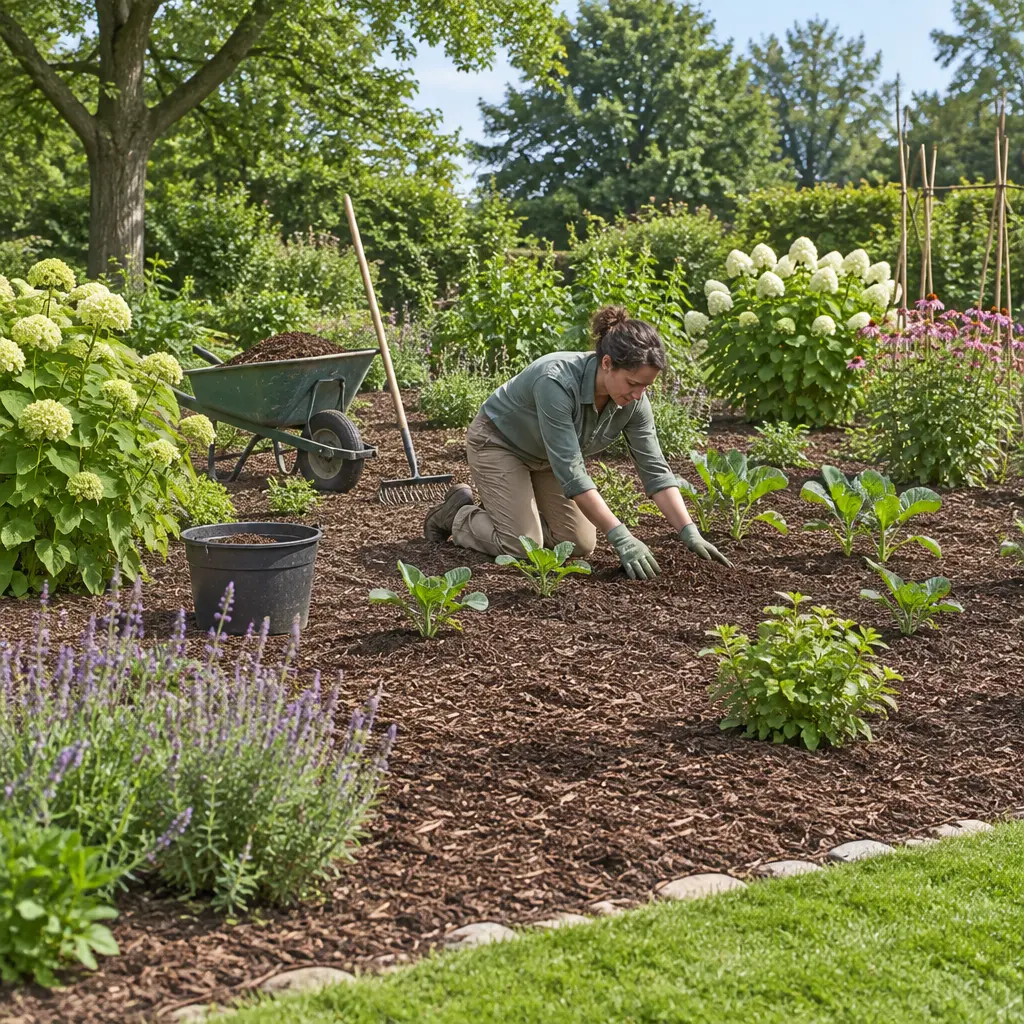
Aggressive weed removal—whether by repeated cultivation, pulling, mowing, or herbicide use—can leave soil bare, compacted, or biologically stressed. Soil health is the capacity of soil to function as a living ecosystem that sustains plants, animals, and people, according to the U.S. Department of Agriculture’s Natural Resources Conservation Service (NRCS). Restoring it means protecting the soil surface, rebuilding organic matter, encouraging roots and soil organisms, and correcting compaction or nutrient problems based on evidence rather than guesswork. These steps matter because soil erosion can accelerate when vegetation is removed: USDA estimates that U.S. cropland loses soil to erosion at an average rate of about 4.6 tons per acre per year, though rates vary greatly by site and management.
Soil health recovery begins with diagnosing damage after weed removal
Soil health recovery is the process of restoring soil’s physical structure, chemical balance, and biological activity after disturbance. The NRCS describes soil health through its capacity to function as a “living ecosystem” and organizes practical management around four principles: keep soil covered, minimize disturbance, maximize living roots, and increase biodiversity. After aggressive weed control, these principles help distinguish the actual problem—such as exposed soil, crusting, compaction, or loss of living roots—from assumptions about what the soil needs.
The recovery strategy depends on the removal method and the site. Hand-pulling may disturb only small patches, while repeated tillage can break aggregates and expose organic matter to faster decomposition. Herbicides may leave soil structure largely undisturbed, but the appropriate replanting interval depends on the product label, application rate, weather, and intended plants. A simple inspection followed by targeted testing is usually more useful than applying fertilizer or amendments automatically.
Physical damage: bare ground, erosion, and compaction
Physical damage refers to changes in soil cover, pore space, aggregation, or surface stability. Bare soil is more exposed to raindrop impact, runoff, and wind; compacted soil has fewer large pores for air and water movement. Look for surface crusts, standing water after ordinary rain, ruts, runoff channels, and areas where a shovel or garden fork meets unusual resistance. These signs are clues, not a substitute for checking soil moisture and comparing affected areas with undisturbed ground.
The USDA’s 4.6-ton-per-acre annual cropland erosion estimate is a national average, not a prediction for an individual garden or landscape. It nevertheless illustrates why prompt cover matters: erosion risk can rise sharply on slopes, fine-textured soils, and sites exposed to intense rain. A simple visual comparison chart can help track recovery: record the percentage of ground covered, infiltration time, visible runoff, and plant establishment at the same locations every few weeks.
Biological and chemical damage: roots, organisms, and soil tests
Biological condition includes the activity of roots, fungi, bacteria, earthworms, and other soil organisms that contribute to decomposition and nutrient cycling. Removing weeds also removes living roots, but it does not necessarily mean that soil organisms have been destroyed. Re-establishing suitable vegetation and avoiding unnecessary disturbance can restore food and habitat for soil life. Earthworm counts, root growth, and the breakdown of surface residues can provide practical, though imperfect, field indicators.
Chemical condition concerns pH, salinity, and available nutrients. These cannot be reliably diagnosed by appearance alone. A soil test from a university or accredited laboratory can identify whether pH or nutrients need correction; follow the laboratory’s recommendations for the intended plants. The University of Minnesota Extension advises basing lime and fertilizer decisions on soil-test results, since excessive inputs may harm plants, waste money, or contribute to nutrient runoff.
Soil cover rebuilds protection and living roots after weed removal
Soil cover is the protective layer of living plants, crop residue, or mulch over the soil surface. NRCS identifies keeping soil covered as a core soil-health principle because cover buffers rain and temperature, limits erosion, and helps conserve moisture. The best cover depends on the setting: a garden bed may benefit from clean organic mulch, while an open planting area may be better protected by a suitable cover crop or dense, desired groundcover.
Mulch protects beds while plants re-establish
Mulch is a layer of material placed on the soil surface to reduce evaporation, moderate temperature, and suppress new weeds. For ornamental beds and gardens, University of California Statewide Integrated Pest Management guidance commonly recommends organic mulches such as wood chips, leaves, or straw, with depth adjusted to the material and purpose. Keep mulch pulled back from trunks and plant crowns, and avoid piling it against stems, where excess moisture can encourage decay or create shelter for pests.
Use weed-free material where possible. Fresh, immature compost or hay containing viable weed seeds can introduce new weeds, while very fine or water-repellent materials may interfere with infiltration if applied incorrectly. Mulch is a temporary protective measure, not a repair for severe compaction or poor drainage; those issues need separate attention.
Cover crops restore roots and extend the growing season
A cover crop is a plant grown primarily to protect and improve soil rather than to harvest as the main crop. Grasses such as oats or rye provide fibrous roots and surface residue; legumes such as clover or vetch can add biologically fixed nitrogen when they grow successfully and are managed appropriately. Species selection should account for local climate, planting date, water availability, and the following crop. Some cover crops can become difficult to manage or act as weeds if allowed to set seed.
The USDA Sustainable Agriculture Research and Education program reports that cover crops can improve soil cover, support soil structure, and contribute to nutrient cycling, but outcomes vary by species, management, and region. Terminate or mow a cover crop before it competes with the next planting, and check local guidance for planting windows. In small beds, a fast-growing, non-invasive cover can be more practical than leaving soil bare while waiting for a permanent planting.
Low-disturbance management rebuilds soil structure and organic matter
Low-disturbance management reduces unnecessary digging, tillage, and traffic so that soil aggregates, pores, fungal networks, and organic residues can develop. Soil organic matter consists of decomposed plant and animal material and is important for aggregation, water retention, and nutrient cycling. Its recovery is gradual: adding organic material can improve surface conditions, but rebuilding stable soil organic matter takes time and depends on climate, soil type, and continued management.
Compost improves soil when applied to the right purpose
Compost is decomposed organic material used as a soil amendment or surface dressing. It can add organic matter and nutrients, but its composition varies, and it should not be treated as a universal cure. The U.S. Environmental Protection Agency notes that composting transforms organic materials into a soil amendment; finished compost should be mature and suitable for the intended use. Avoid excessive additions, especially where soil phosphorus is already high or where runoff could carry nutrients to waterways.
For planting beds, mix amendments only as appropriate to the planting plan and soil conditions; repeated deep mixing can disrupt established structure. A thin surface application is often preferable in established landscapes. If the soil test identifies a nutrient deficiency, use the recommended amendment and rate rather than relying on compost alone.
Compaction relief should be targeted, not routine
Compaction occurs when pressure squeezes soil particles together, reducing pore space. Avoid working wet soil, which is especially vulnerable to compaction, and keep foot and equipment traffic to defined paths. Where compaction is confirmed, a garden fork or broadfork can loosen a small bed with less inversion than conventional digging; larger sites may need professional assessment. Adding organic matter and establishing deep-rooted plants can support longer-term improvement, but neither immediately reverses severe compaction.
Do not aerate merely because weeds were removed. First compare infiltration and root penetration in affected and unaffected areas. On many sites, reducing traffic, maintaining cover, and allowing roots to work through the soil are safer first steps than repeated mechanical disturbance.
Plant selection and weed prevention sustain restored soil
Plant selection sustains soil recovery by replacing unwanted vegetation with plants suited to the site’s light, moisture, and soil conditions. Dense, well-adapted plantings can maintain living roots and reduce open ground where new weeds establish. The goal is not to eliminate every plant, but to manage competition while keeping the soil protected and supporting the intended landscape or crop.
Choose diverse, site-adapted plants
Plant diversity means using more than one suitable species or functional type, such as grasses, flowering perennials, and groundcovers. Different root depths and growth habits can use soil resources at different levels and provide varied habitat. Select non-invasive species suited to local conditions, and consult regional extension or native-plant resources. A diverse planting is not automatically successful if plants are poorly matched to the site or compete excessively during establishment.
In vegetable plots, rotate crop families where practical and use cover crops between production periods. In lawns and ornamental areas, fill bare patches promptly with the desired turf, groundcover, or perennial rather than leaving disturbed soil open. Establishment watering should support roots without causing runoff or waterlogging.
Prevent weeds without repeating damaging removal
Integrated weed management combines prevention, monitoring, cultural practices, and targeted control. Remove young weeds before they set seed, clean tools after working in infested areas, and avoid moving contaminated soil or mulch. Where herbicides are used, follow the product label, including restrictions on replanting, personal protection, and application near water or desirable plants. The U.S. Environmental Protection Agency emphasizes that pesticide labeling is legally enforceable and provides directions for safe and effective use.
Repeated broad-scale tillage or indiscriminate spraying can create a cycle of bare soil and renewed weed establishment. A better sequence is to identify the weed, select the least disruptive effective control, restore cover, and monitor regrowth. For persistent or regulated invasive plants, local cooperative extension or land-management agencies can advise on species-specific control and disposal.
A practical recovery sequence turns soil-health principles into action
A recovery sequence helps prevent overcorrection and keeps interventions proportional to the damage. The following steps apply broadly to gardens and landscaped areas, but agricultural fields, contaminated sites, and steep slopes may require site-specific professional advice.
- Inspect the site for bare patches, erosion, crusting, standing water, compaction, and surviving desirable plants.
- Identify the weed-control method used and check any herbicide label for planting restrictions or carryover concerns.
- Protect exposed soil promptly with suitable mulch, residue, or a locally appropriate cover crop.
- Test soil where pH or nutrient problems are suspected, and apply amendments only at evidence-based rates.
- Reduce traffic and unnecessary digging; address confirmed compaction only when soil is dry enough to work.
- Replant with adapted species that provide continuous cover and roots, then monitor establishment and weed return.
For a simple monitoring record, note ground-cover percentage, plant survival, visible runoff, and how quickly water enters the soil after comparable rainfall or irrigation. Photographing the same spots monthly can reveal trends that are difficult to judge from memory. A graph of these measures over time can illustrate whether cover and infiltration are improving, while soil-test results provide a more reliable basis for nutrient decisions.
Conclusion: soil health returns through cover, roots, and measured care
Restoring soil health after aggressive weed removal starts with diagnosing physical, biological, and chemical conditions rather than applying a one-size-fits-all remedy. Cover and living roots protect the surface; mulch and suitable cover crops reduce exposure; compost and other amendments should be chosen according to purpose and soil-test evidence; and low-disturbance practices help preserve structure. Thoughtful plant selection and integrated weed management then sustain the recovery.
Because erosion, compaction, and nutrient status vary from site to site, the most useful next step is to inspect the affected area, protect bare soil, and contact a local extension service or soil-testing laboratory when diagnosis is uncertain. Consistent monitoring and modest, targeted changes can turn weed removal into an opportunity to build a more resilient landscape.
Sources: USDA Natural Resources Conservation Service, Soil Health, https://www.nrcs.usda.gov/conservation-basics/natural-resource-concerns/soil/soil-health; USDA Natural Resources Conservation Service, Erosion and Sedimentation, https://www.nrcs.usda.gov/conservation-basics/natural-resource-concerns/soil/erosion; University of Minnesota Extension, Soil testing for lawns and gardens, https://extension.umn.edu/managing-soil-and-nutrients/soil-testing-lawns-and-gardens; University of California Statewide Integrated Pest Management Program, Mulches, https://ipm.ucanr.edu/PMG/GARDEN/ENVIRON/mulches.html; USDA Sustainable Agriculture Research and Education, Managing Cover Crops Profitably, https://www.sare.org/resources/managing-cover-crops-profitably/; U.S. Environmental Protection Agency, Composting, https://www.epa.gov/sustainable-management-food/composting; U.S. Environmental Protection Agency, Introduction to Pesticide Labels, https://www.epa.gov/pesticide-labels/introduction-pesticide-labels.