
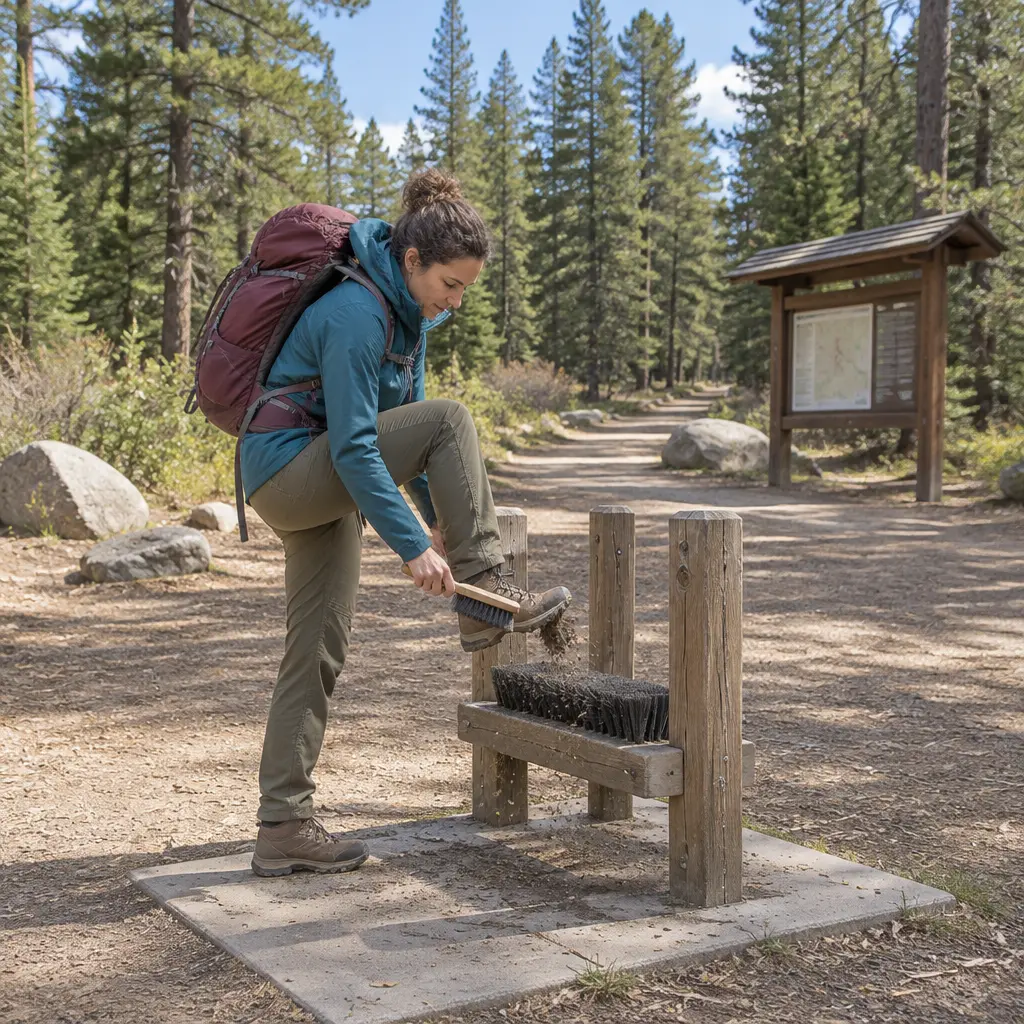
Seeds hitchhiking on boots, clothing, pets, and outdoor gear can carry invasive plants and plant pathogens from one place to another. Trailhead biosecurity means using simple prevention habits before and after a hike—especially brushing off dirt and seeds, cleaning footwear and equipment, and staying on established routes. These actions matter because invasive species can displace native plants, alter habitat, and impose substantial economic costs: a 2021 study estimated that biological invasions cost the global economy more than $1.28 trillion between 1970 and 2017. A few minutes of cleaning at the trailhead can reduce one important pathway for their spread.
Trailhead biosecurity habits prevent seed movement
Biosecurity is the practice of preventing harmful organisms from entering or spreading between places. In the trail setting, the National Park Service and other land managers commonly describe prevention as cleaning gear, staying on designated trails, and avoiding the movement of contaminated soil or plant material. Seeds are not the only concern: mud can carry plant fragments, insects, fungi, and pathogens as well.
The risk is practical, not hypothetical. Seeds can lodge in boot tread, socks, gaiters, laces, tent fabric, and vehicle floor mats. A hiker who crosses a seed-rich roadside or disturbed area may carry propagules to a comparatively uninvaded trail. The likelihood of establishment varies with the species, habitat, and conditions, but reducing transport helps limit the opportunities for new infestations.
Clean gear before entering a trail
Prevention starts before the hike. Inspect boots, clothing, trekking poles, packs, and pet equipment for visible seeds, plant fragments, and clumps of soil. The U.S. Department of Agriculture’s “PlayCleanGo” campaign advises outdoor users to clean gear before and after recreation. Removing material before arrival helps keep seeds out of trail corridors and natural areas.
Pay particular attention to textured surfaces: boot lugs, Velcro, cuffs, and fabric seams can trap seeds. If possible, use a brush or boot-cleaning station at the trailhead. Dispose of removed seeds and soil in a trash receptacle rather than shaking them onto the ground, where viable seeds could take root.
Stay on designated routes and avoid spreading soil
Staying on established trails limits contact with roadside weeds, restoration areas, and sensitive vegetation. It also reduces the chance of carrying seeds into places where they are less common. The U.S. Forest Service recommends following local guidance and avoiding shortcuts, which can damage plants and create new disturbed ground where invasive species may establish.
When a route is muddy, do not walk around the wet section if doing so would widen the trail or cross vegetation. Mud stuck to footwear can transport seeds and organisms, so clean boots after the hike and before visiting another site. Where land managers post specific instructions—such as temporary closures or cleaning requirements—follow them.
Cleaning habits interrupt seed dispersal pathways
Seed dispersal is the movement of seeds away from a parent plant. Some plants disperse seeds naturally by wind, water, or animals; people can unintentionally add another pathway by carrying seeds on clothing and equipment. A 2015 study published in NeoBiota found that recreational hikers can transport plant seeds on clothing, with the amount and type of seed carriage affected by clothing and hiking conditions. The finding supports a simple principle: inspect and clean the items that contact vegetation.
Brush, inspect, and remove seeds after the hike
A post-hike check is a visual inspection of footwear, socks, trousers, gaiters, and packs, followed by removal of any attached seeds or plant matter. A small brush or comb can help dislodge material from boot tread and fabric. Check before getting into a vehicle, since seeds that fall onto floor mats may later be carried to another trail.
For a useful visual aid, a trailhead sign or illustrated checklist can show common seed-catching spots: boot soles, laces, cuffs, and pack seams. The check is especially worthwhile after walking through tall grass, brush, or areas with burrs and seed heads. Never assume that a clean-looking upper means the soles and tread are clear.
Use boot-cleaning stations and follow local protocols
Boot-cleaning stations provide tools such as brushes or scrapers so visitors can remove soil and plant material at a site boundary. Their purpose is to reduce the movement of seeds and other organisms between locations. Station designs and requirements differ, so hikers should follow posted directions and avoid washing material into waterways or onto uncleaned ground.
Cleaning is also important when moving between recreation areas, farms, and conservation lands. For example, the National Park Service’s “Clean, Drain, Dry” guidance for aquatic recreation addresses watercraft and equipment that can spread aquatic invasive species. Although those procedures target water rather than trail seeds, they illustrate the broader biosecurity approach: remove hitchhikers before crossing into a new environment.
Trailhead biosecurity protects ecosystems and communities
Invasive plants can compete with native species, change habitat structure, and affect land uses such as grazing and recreation. The U.S. Fish and Wildlife Service notes that invasive species are a major threat to native wildlife and habitats. Prevention is valuable because controlling an established infestation can require repeated treatment and long-term monitoring; early detection and rapid response are generally more manageable than addressing a widespread invasion.
Costs make prevention relevant beyond conservation. The 2021 global assessment in Nature estimated cumulative economic costs from biological invasions at over $1.28 trillion from 1970 through 2017, while cautioning that reported costs represent only part of the total burden. That figure is not a measure of trailhead seed transport alone, but it demonstrates why reducing avoidable pathways is worthwhile.
Report unfamiliar plants and follow site-specific advice
Hikers can support early detection by noting unusual plant patches and reporting them to park staff or the relevant land manager. Do not pull or transport a suspected invasive plant unless officials request it; improper handling can spread seeds or fragments. Photos and a location description are often more useful than disturbing the plant.
Local guidance matters because species and risks vary by region. Some sites may prioritize cleaning footwear, while others may issue additional directions for pets, bicycles, horses, or vehicles. A brief check of current park or land-management notices helps make general good habits fit local conditions.
Conclusion: make seed checks part of every trip
Trailhead biosecurity works by interrupting the movement of seeds and other organisms. Clean gear before entering, stay on designated routes, inspect and brush footwear after the hike, and use cleaning stations or site-specific protocols when available. These small habits complement the larger work of land managers and help protect native habitats, recreation areas, and neighboring communities.
Before your next outing, check local guidance, carry a small brush, and make a final gear inspection part of packing up. If you spot a suspicious plant, record its location and alert the land manager rather than moving it.
Sources: DiTomaso, J. M., et al., “Weed control in natural areas in the western United States,” University of California Agriculture and Natural Resources, https://anrcatalog.ucanr.edu/Details.aspx?itemNo=74146; Faulkner, K. T., et al., “The costs of biological invasions in South Africa,” NeoBiota, 2015, https://doi.org/10.3897/neobiota.24.8681; Haubrock, P. J., et al., “Economic costs of invasive alien species across Europe,” NeoBiota, 2021, https://doi.org/10.3897/neobiota.67.58196; Hulme, P. E., “Invasive species challenge the global response to emerging diseases,” Trends in Parasitology, 2014, https://doi.org/10.1016/j.pt.2014.03.005; National Park Service, “Clean, Drain, Dry,” https://www.nps.gov/subjects/invasive/clean-drain-dry.htm; National Park Service, “Invasive Species,” https://www.nps.gov/subjects/invasive/index.htm; Pickering, C., Mount, A., Wichmann, M. C., and Bullock, J. M., “Estimating human-mediated dispersal of seeds within an Australian protected area,” Biological Invasions, 2011, https://doi.org/10.1007/s10530-010-9935-4; Pyšek, P., et al., “Scientists’ warning on invasive alien species,” Biological Reviews, 2020, https://doi.org/10.1111/brv.12627; U.S. Department of Agriculture, “PlayCleanGo: Stop Invasive Species in Your Tracks,” https://www.playcleango.org/; U.S. Fish and Wildlife Service, “Invasive Species,” https://www.fws.gov/program/invasive-species; U.S. Forest Service, “Invasive Species,” https://www.fs.usda.gov/managing-land/invasive-species.